
The product page: where trust is won
Eight weeks out from Black Friday, most e-commerce teams I talk to share the same obsession: their media plan. Which channels, which budgets, which creative. Fair enough. But very few of them challenge the experience a visitor will find after clicking a display banner or a Meta ad.
Because an ad, however good, doesn't sell. It makes people curious. The visitor clicks, gets interested, then starts checking. They compare, read reviews, look for someone who already owns the product. The ad opens the conversation, but it isn't what closes it. Your site can close it, of course. So can a competitor's. Or nobody at all.
Interest is not conviction
Knowing what a product does is not the same as being sure it's right for you. The visitor landing on your site has understood your offer. What holds them back are very concrete questions, and they come up everywhere.
The 4 doubts found in almost every shopper journey:
- Their own case: will this product work for me?
- The difference: does this product really add something compared with what I have today?
- The price: why does it cost that much?
- Daily use: how do I install it, look after it, use it?
A new ad won't answer any of these questions. The visitor already got your message. What they're looking for now is a reason to trust you.
At iAdvize, we sum it up in a simple equation: speed + clarity = confidence. Speed means answering the doubt before it blocks the purchase. Clarity means giving the right information at the right moment of the shopper journey. And the stakes are high: uncertainty blocks 97% of shopper journeys.
It's even more true for expensive products. A €15 item you buy again every month needs no justification (nor a Black Friday discount, for that matter). The more expensive and unfamiliar the product, the more doubts there are to clear.
The last mile is your product page
Take a €1,200 sofa. The visitor saw the ad, watched 2 videos, read a comparison. They come back to the product page to buy. And one last question pops up: "Will it fit up my staircase? Will the fabric survive my cat's claws? Will it arrive before Christmas?" If the answer isn't right in front of them within seconds, they go looking elsewhere. And nothing guarantees they'll come back.
Your whole investment (advertising, influencers, content) plays out in those few seconds when the visitor hesitates on the product page. Yet it's the least prepared moment. A product description, an FAQ or a video only answer the questions you anticipated. And every visitor arrives with their own question.
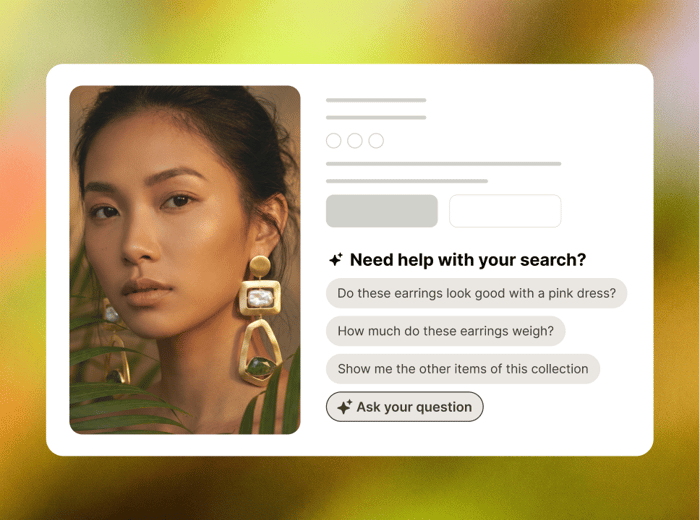
That's the job of the AI Shopping Assistant: answering each visitor's doubt the moment it comes up, with your product knowledge and your brand's tone of voice. It anticipates the key questions and suggests them before they slow the purchase down. On product pages, it delivers a +10% incremental impact on conversion rate.
Your visitors are already writing down their doubts
The good news is that these doubts are no mystery. They're already written down somewhere: in the customer service inbox, in the comments on your ads, in reviews, in return reasons. Pull them together and you have the brief for all your reassurance content, with the exact questions people ask before buying, in their own words.
But the richest source, in my view, is the conversations on your site. Reviews and returns come after the purchase. People who didn't buy leave no trace. A conversation with the AI Shopping Assistant captures the question before the decision, at the exact moment it blocks, in the visitor's own words.
On the iAdvize platform, these conversations can be reviewed in Shopper Insights, and the AI flags the gaps it spots in real exchanges, meaning the questions the knowledge base can't answer yet. The doubts you collect feed your product pages, your buying guides, your creators' briefs. And every piece of content you produce in turn expands what the Assistant can say.
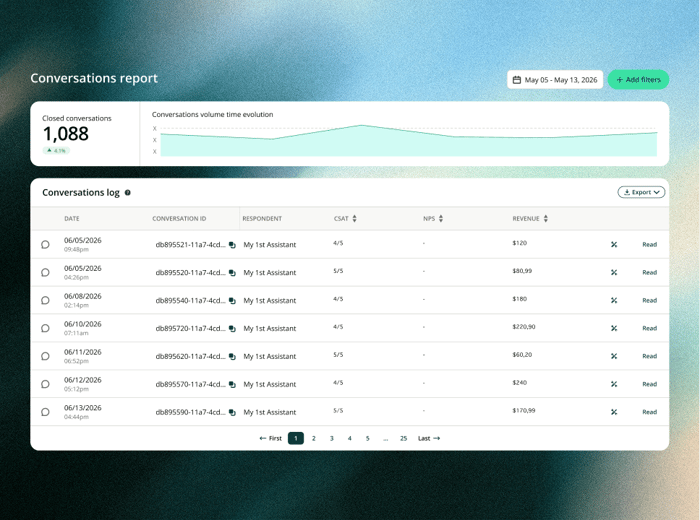
A word of caution, though. All these sources tell you what visitors ask. They don't prove your answer is right. That's for the brand to demonstrate.
Who owns this moment of doubt?
In most organizations, nobody. The acquisition team ships its campaigns, the content team its articles, customer service its answers, the e-commerce team its product pages. Everyone does their job well. But the question that blocks the purchase has no owner.
My recommendation: when you prepare a launch or a key period like Black Friday, ask that question at the same time as you build the media plan. What will an interested visitor find when they arrive with their curiosity, and with their doubts? Name someone who owns it, from the ad all the way to checkout.
Measure without fooling yourself
One last point, and not the least: measurement. I see 2 mistakes come up again and again. The first is counting every touchpoint as revenue won. The second is declaring useless a piece of content that helps people decide, just because it didn't get the last click. The answer is the same in both cases: test with and without, and look at the gap.
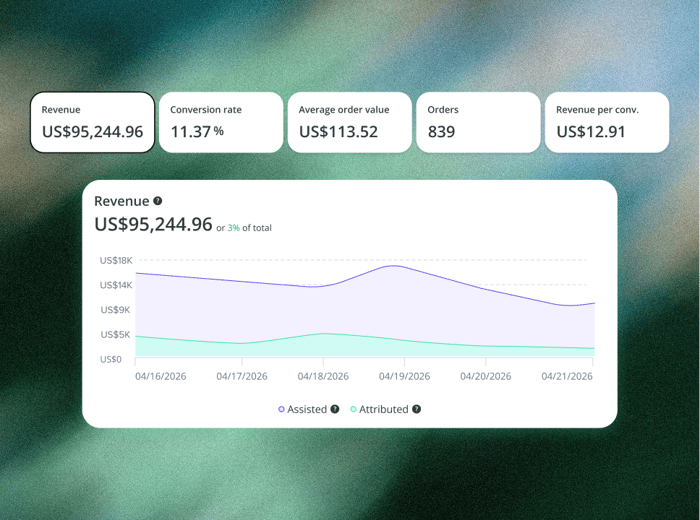
That's our line at iAdvize. When we announce +15% revenue with the AI Shopping Assistant, we mean incremental revenue. And our reporting suite, Shopper Insights, gives your teams full visibility on the impact of every interaction on your e-commerce KPIs, including what works (and what doesn't).
Prepare your PDPs the way you prepare your campaigns
The visitor who comes back to your product page at 10 p.m., credit card within reach, with one last question, is not a rare case. They're the one you paid your whole acquisition budget for. What they find in the next few seconds, either you planned it, or you left it to chance.
This moment deserves to be planned at the same level as the media budget, starting today for Black Friday.
Want to see which questions your visitors really ask on your product pages, and how the AI Shopping Assistant answers them? Request a demo on your own site.